
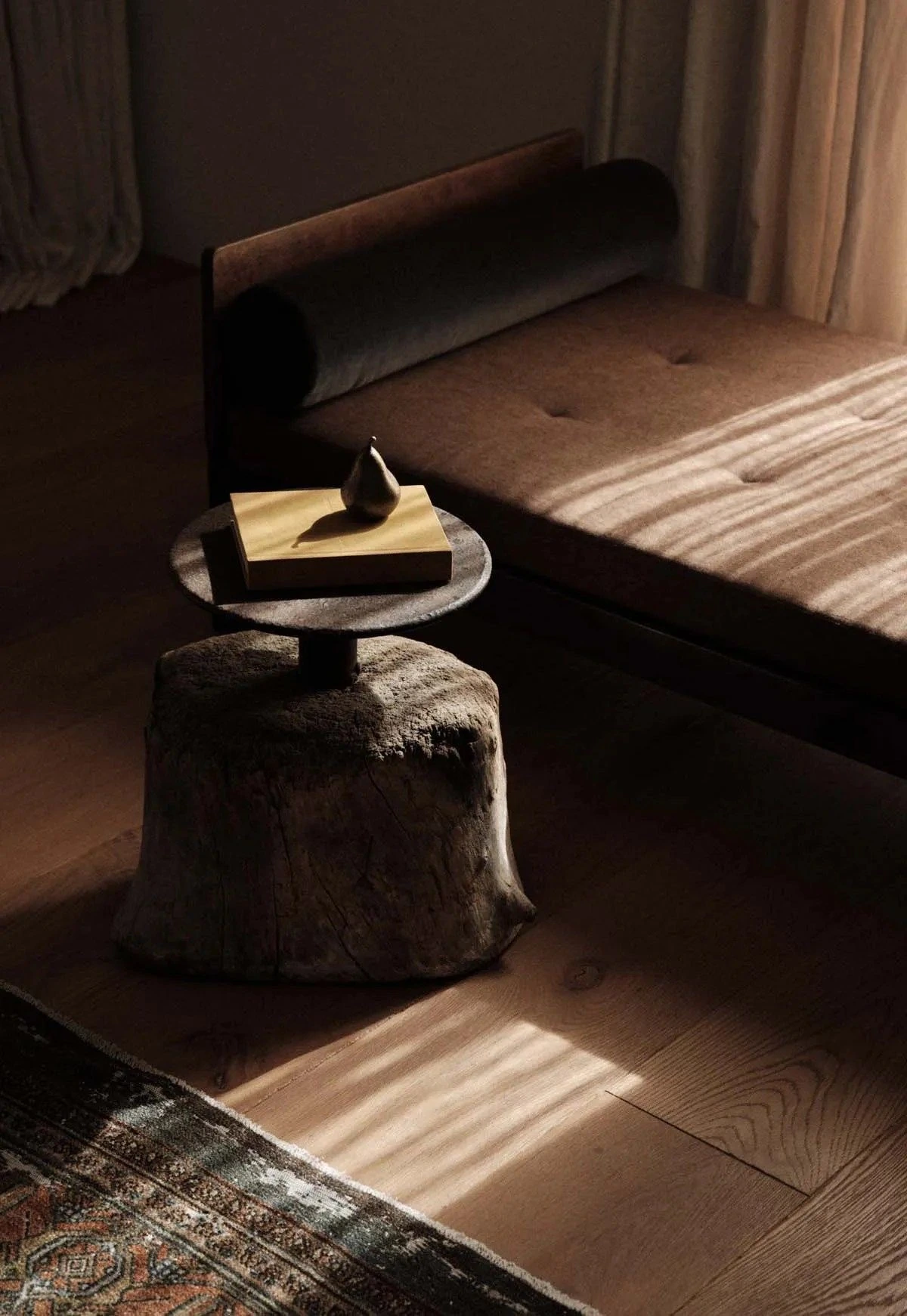
Think of the hour when light slips through a curtain and reaches the arm of a chair. The book is still closed. The tea has gone cold. You were only passing through, but you sit down. Some design decisions make sense in precisely this way: the body finds its place before we can explain why.
Why does one corner invite us to lower our voices while another seems to urge us to finish up? We choose the sofa, the table, even the object that took three months to arrive. Then we switch on a glaring overhead light and the room acquires the charm of a waiting room. Quite an investment to feel that our number has not been called.
I am interested in what happens between light and the things it touches. A curtain that filters daylight without erasing it. Walnut grain emerging in the afternoon. A lamp beside a book, another accompanying a conversation. And shadow, too: somewhere for the eye to rest without everything demanding attention.
Before deciding what to change, visit the same room in the morning, afternoon and evening. Sit somewhere different. Switch on just one lamp. Notice what feels welcoming and what becomes uncomfortable. A home offers clues; looking up from our phones helps us find them.
Perhaps that corner does not need another piece of furniture just yet. Perhaps it needs the light that makes you return to it. Where would you sit tonight if you chose entirely by how it made you feel?