
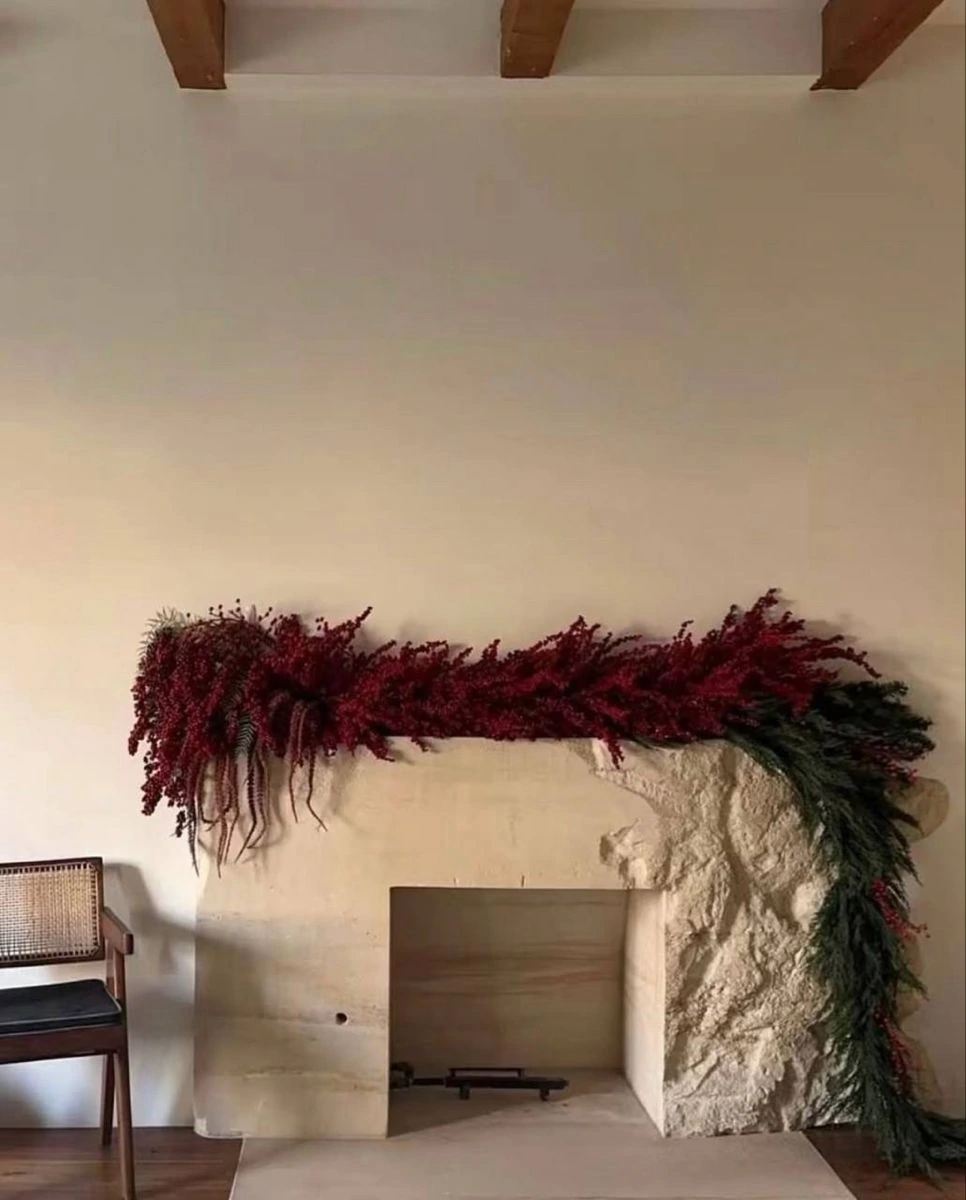
Before the doorbell rings, the house is already saying something. Branches dress the mantel, a lamp glows beside someone’s favourite seat, and a scent drifts from the kitchen. Nobody has arrived, yet everything seems to say: I’m so glad you’re coming.
Seasonal decorating can turn a date on the calendar into something we anticipate together. Children look for what has changed. Someone recognises an ornament from years ago. A surprise waits among the branches. And, inevitably, a relative asks why everything looks different this year. Tradition has its own supervisory committee.
I am interested in what those details spark between people. An object that invites someone to tell its story. A small gift somewhere unexpected. A visitor’s favourite flowers. A comfortable corner for those who prefer a quieter conversation. These are ways of saying “I thought of you” without announcing how much work it took. Tempting though that announcement occasionally is.
How do we welcome a family in which nobody is quite alike? Someone arrives hungry, someone needs to catch up, and someone turns every anecdote into a limited series. Someone else brings a new face. I like to imagine a home that makes room for them all: places to gather, light that invites them to stay, and details that awaken curiosity without requiring everyone to behave as though they were in a photograph.
A garland can be spectacular. But if it takes someone’s seat or turns every movement into a balancing act, it may be time to negotiate. Design should make gathering easier. Room to put down a glass, pull up a chair, embrace at the door. Beauty begins to mean something when life can happen around it.
In the end, perhaps nobody will remember how the ribbons matched. They will remember the surprise, the laugh that interrupted the toast, the conversation they had not had in months. That is what I want a welcome to express: you belong here; there is a place for you. And if the evening ends with a story told again next year, we have another page for the family album.