
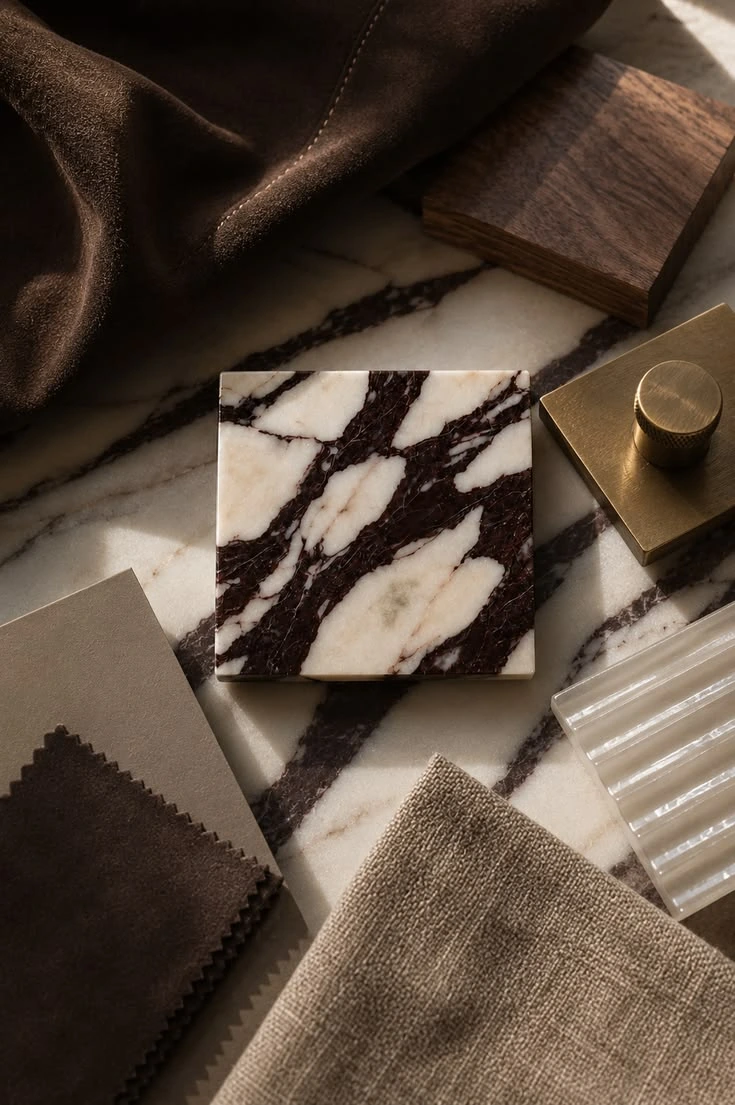
On the table sit a richly veined stone, a walnut sample and a fabric that begs to be touched. Separately, all three are persuasive. Together, the real conversation begins. Choosing materials can feel rather like arranging a dinner: you may invite fascinating people only to discover that none of them intends to listen.
A strong vein needs room. Walnut brings a depth that shifts with the light. Fabric introduces a different pace: somewhere to rest a hand, a fold that softens a severe line. I am interested in that meeting, in how each material helps us appreciate the others.
Trouble begins when everyone wants the lead. Dramatic stone, bold wood grain, polished metal, velvet, relief. A small awards ceremony in which nobody will accept a supporting role. Sometimes removing a single sample is enough for the others to make sense.
Then comes a less photogenic and far more useful question: how will people live here? The surface will hold glasses; the fabric, bodies; the wood, hands and years. Samples need to be seen together in the room’s light, with a conversation about use, care and touch. A finish that makes you supervise your guests may deserve another thought.
I want an interior to invite you closer. To offer contrast and somewhere for the eye to rest. To let you put down a book, sit, live. After all, what good is an impeccable combination if you feel you need permission to touch it?